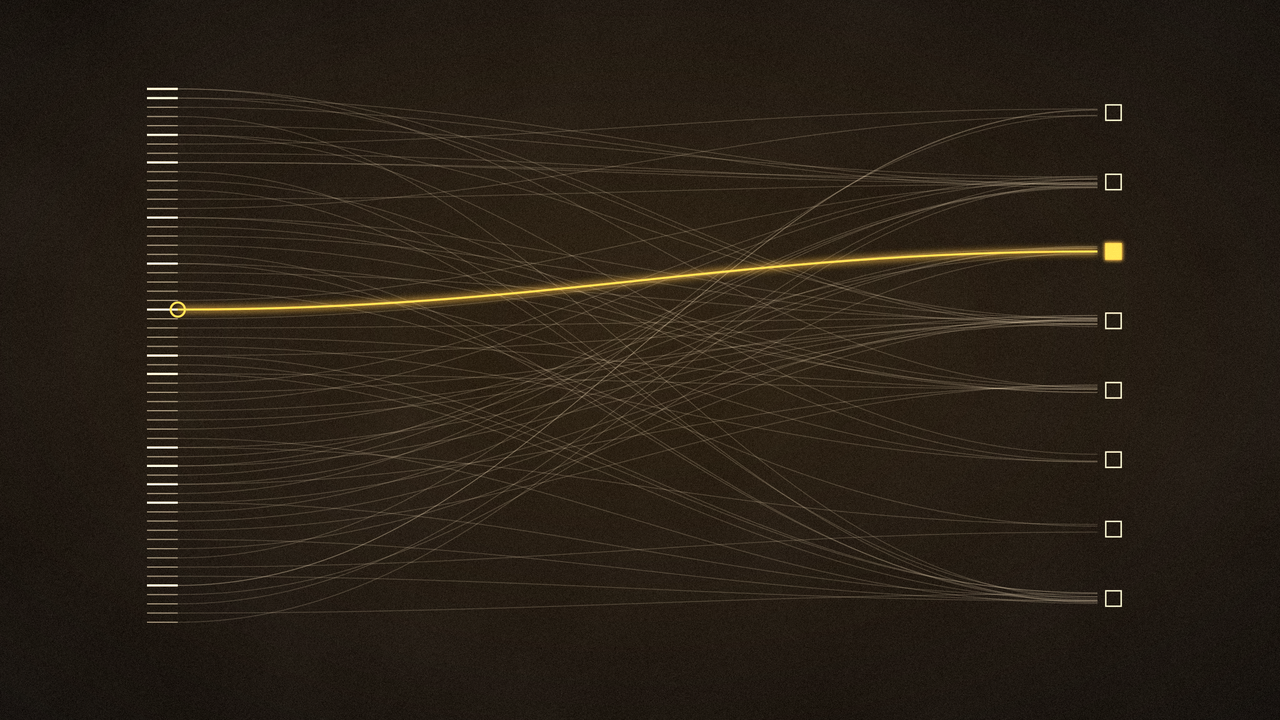
The Intersection
Which ceramist closes which joint into which vacuum domain.
59 houses shape the ceramic.
16 can close the joint.
10 do it under their own roof.
Where the 16 live : US 7 · DE 2 · FR 2 · UK 2 · CN 1 · JP 1 · NL 1
Why the joint is the product
The vacuum stack does not forgive interfaces. Between the ceramic wall and the metal flange sits a seal that either bakes tight for twenty years or lets air in on year three. Making a perfect insulator is not enough. Someone has to close the joint, at ceramic-to-metal, and hold it through every bake cycle.
Ceramic suppliers and the vacuum systems they feed
In vacuum, the product is never the ceramic. It is the brazed joint that holds. The gold spine traces who closes the joint.
59 ceramists, 16 brazers, 11 countries, 8 vacuum domains
The brazing filter is on. Reset to see every supplier. Tap a company or a system class to focus.
-
Light source / synchrotron 5
-
Accelerator (linac / collider) 12
-
Fusion (tokamak / ECRH gyrotron) 6
-
Semiconductor (etch / depo) 29
-
RF tube (klystron / TWT / X-ray) 19
-
Ion source 1
-
In-vacuum detector 14
-
UHV chamber / analytics 24
How to read it
The gold spine picks the sixteen houses that can close the joint. A filled interior dot marks the ten that make the ceramic under their own roof, and a square node marks the refractory-metal partner. The map opens on the brazing filter for that reason.
What it means
Sixteen can close the joint. Ten do it under their own roof. Integration is the bottleneck: the World map's control layer records the same shape one level up.
The Third Point
- 59 houses → 16 brazers → 10 integrated.
- Brazing and metallisation gate every system class.
Sources · 1
- Owner-collected industry snapshot, raw JSON dated 2026-07-12, kept in-repo at src/data/ceramic-vacuum-actors.raw.json.
Rated [C] contextual : one owner-authored survey, not a peer-reviewed source. Every catalogue and datasheet cited during collection lives in-house.